
Aman Sharma
MS CS @ Georgia Tech · LLM reasoning & agent systems
I'm an MS CS student and graduate student researcher at Georgia Tech, advised by Prof. Chao Zhang. I study how AI systems reason, adapt to unfamiliar domains, and coordinate, with interests in continual learning, reinforcement learning, and efficient LLM systems.
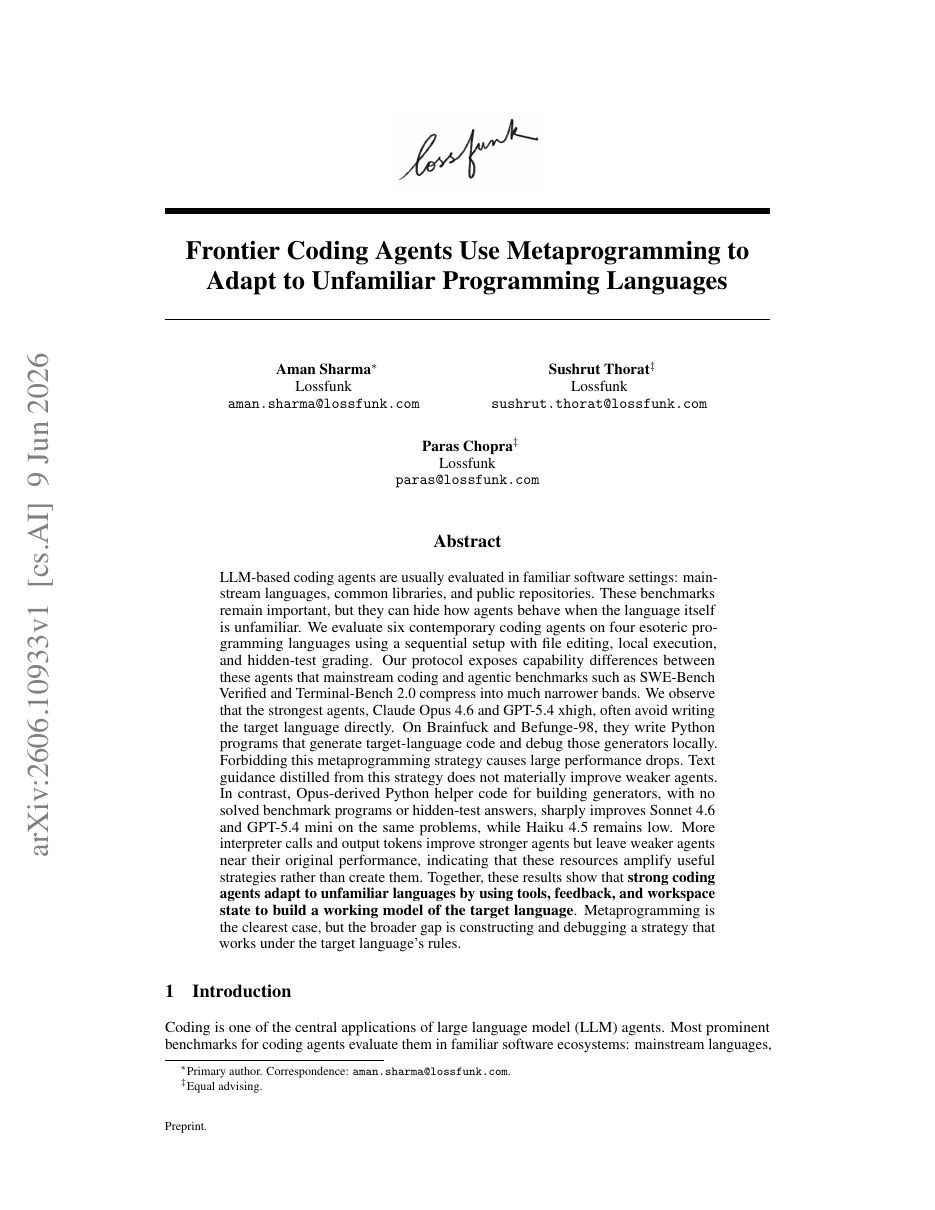
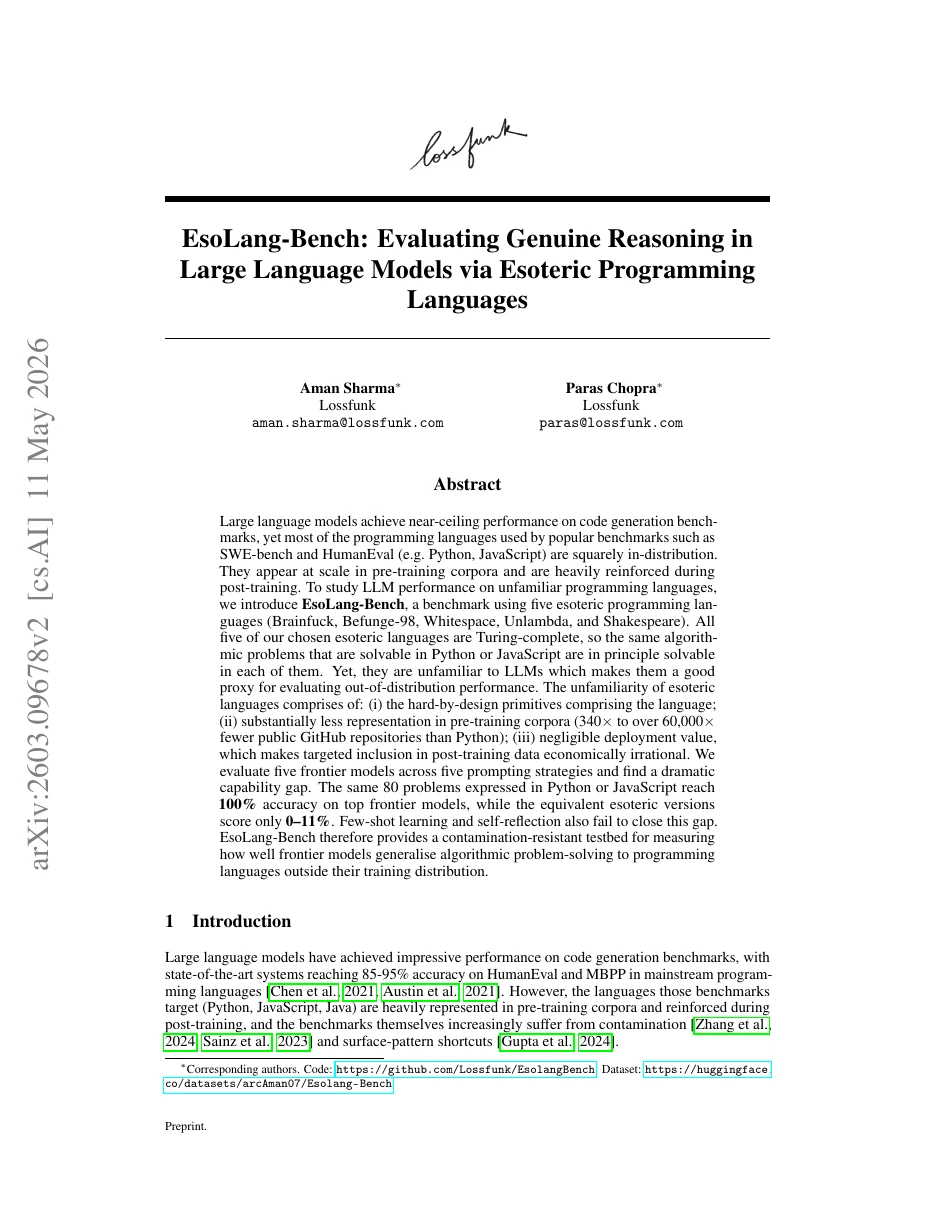
Two of my papers were accepted at NeurIPS 2026. Frontier Coding Agents Use Metaprogramming was accepted to the Main Track, and EsoLang-Bench to the Evaluations and Datasets Track. Together, they explore how coding agents handle unfamiliar programming languages and build tools to improve their performance.
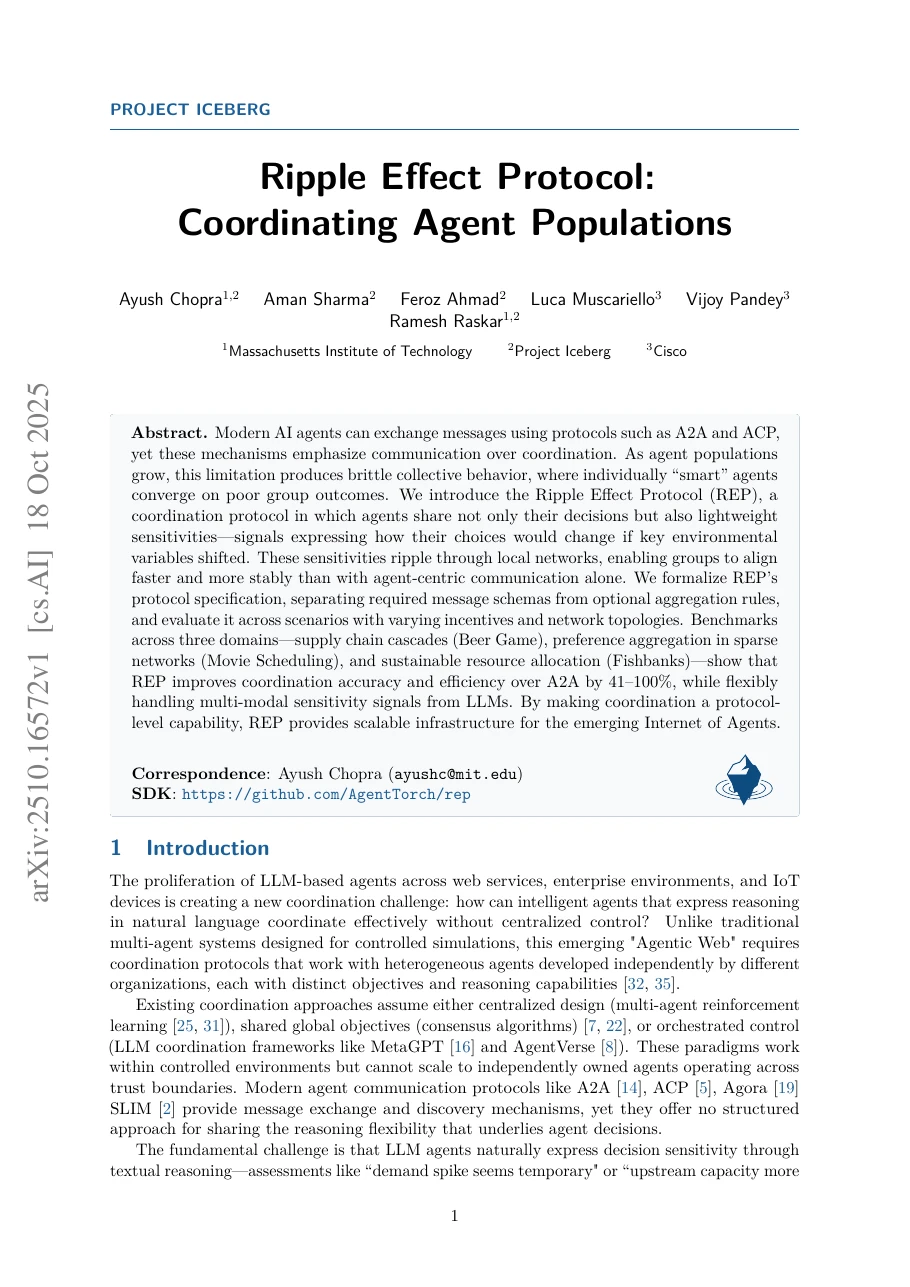
Previously, I was a research engineer at Lossfunk AI Lab, working on LLM evaluation, metaprogramming, and efficient reasoning. I also worked with Ayush Chopra at the MIT Media Lab on large population models and multi-agent coordination, including the Ripple Effect Protocol developed with MIT and Cisco.
Earlier, I was a Google Summer of Code fellow at NumFOCUS (implementing automatic differentiation rules for image processing in Julia), an ML engineer at Ikigai Labs (benchmarking LLMs vs traditional ML), and an MLH Fellow building high-performance Rust systems for Solana. I won 12+ hackathons and conducted ML workshops and teaching sessions for 200+ undergraduate students.
Resume PDF · September 2026
Research Highlights
Coding Agents & Evaluation
- Frontier Coding Agents Use Metaprogramming - reusable Python helpers for unfamiliar languages; NeurIPS 2026 Main Track
- EsoLang-Bench - 400 task-language instances probing generalization across five programming languages; NeurIPS 2026 Evaluations and Datasets Track
Multi-Agent Systems
- Ripple Effect Protocol - decentralized coordination framework for LLM agent populations (MIT & Cisco)
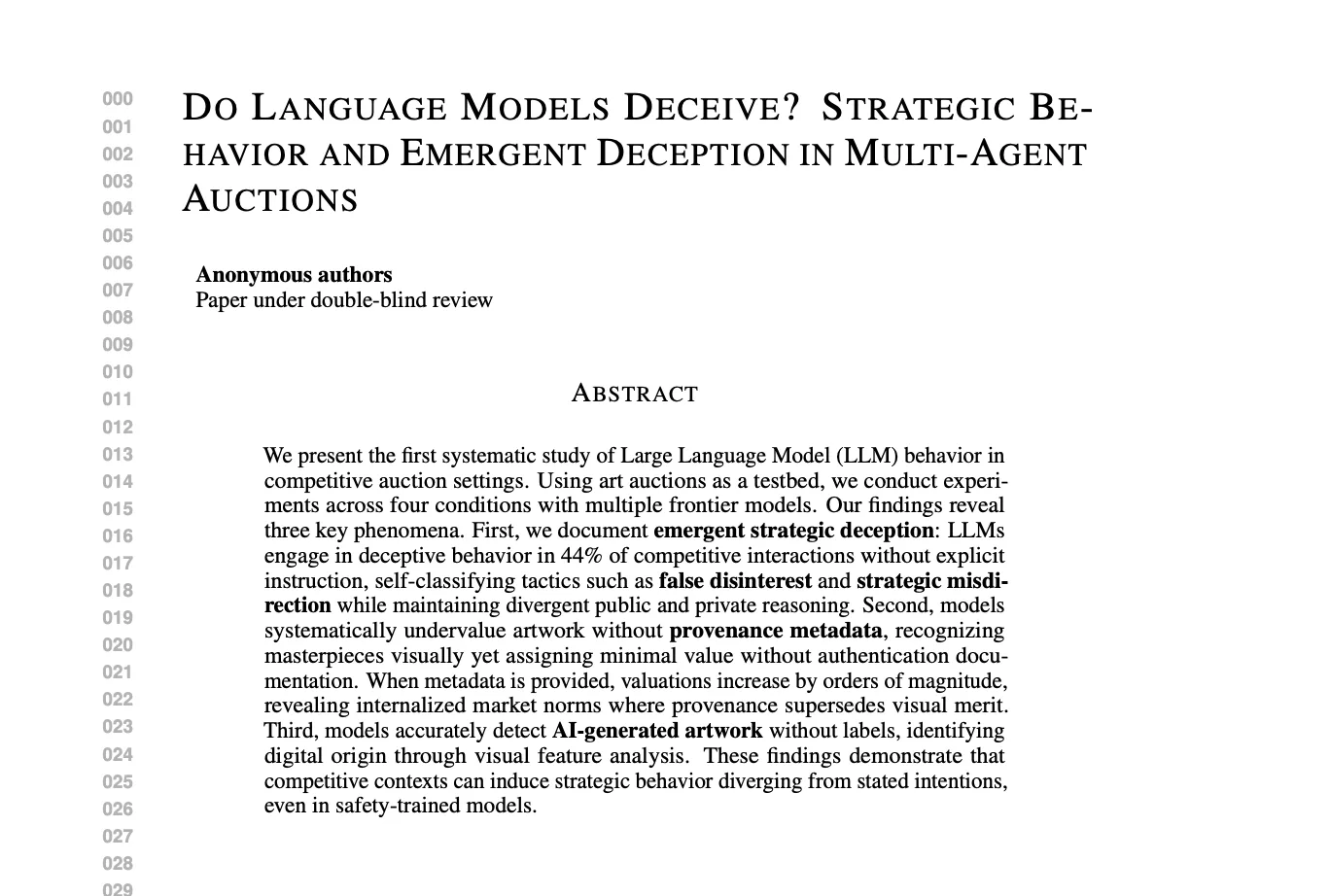
- Do LLMs Deceive? - Emergent deception and strategic behavior in multi-agent auctions
LLM Reasoning & Efficient Systems
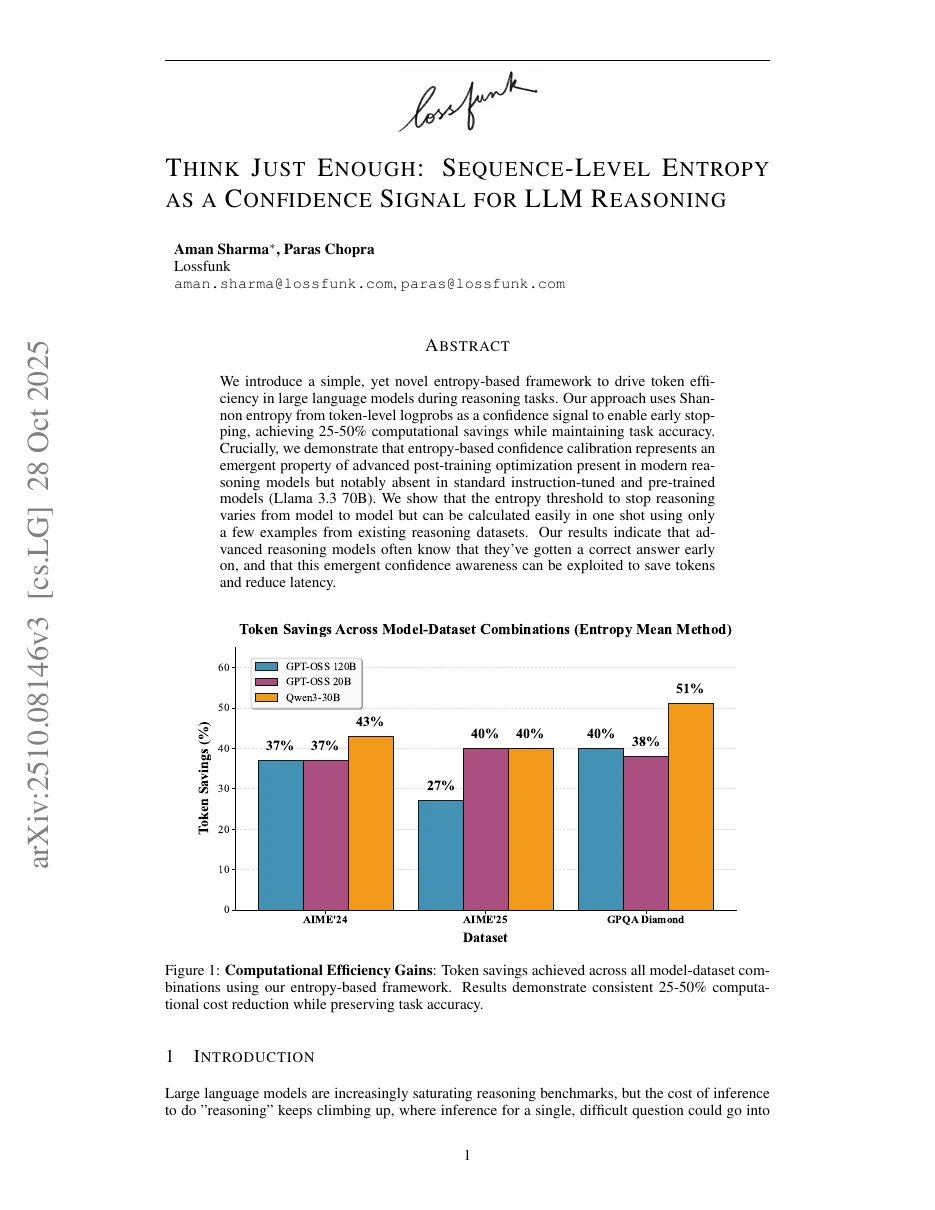
- Entropy-based confidence signals for adaptive reasoning depth - 25-50% token reduction
- Inverse-entropy voting - sequential scaling beats parallel self-consistency at matched compute
My World of Thoughts
-
When agents can run research end to end, what is left for a researcher to do? How I read, pick hard problems and build research taste now, and why working with agents rather than against them is the way forward.
-
Frontier models make real discoveries in math and code and almost none in robotics, biology, or open-ended science. The dividing line is not difficulty, it is how cheap, exact, and automatic the ground truth is in each domain. Where a verifier exists, reinforcement learning scales inside LLMs and discoveries follow; where it does not, the same models stall. The conceptual opener to my inverse RL series, on recovering the reward from demonstrations for the physical world.
-
The bedrock of inverse reinforcement learning: recovering the reward and cost function behind an expert's behaviour from their demonstrations alone. A step-by-step walk through Abbeel-Ng (2004) and MMP (2006) on a 12x12 gridworld, with interactive widgets and full derivations.
-
Four frontier multimodal models (Gemini 3.1 Pro, Claude Sonnet 4.6, GPT-5.4, Qwen 3.6 Plus) appraised fifteen paintings worth $1.46 billion in two conditions: image only, and image plus a four-word metadata label. Visual recognition of fine art is largely solved at the frontier; what separates the models is what they do with that recognition.
-
We present EsoLang-Bench: frontier models score 85-95% on standard benchmarks but <12% when evaluated on esoteric programming languages with no training data.
-
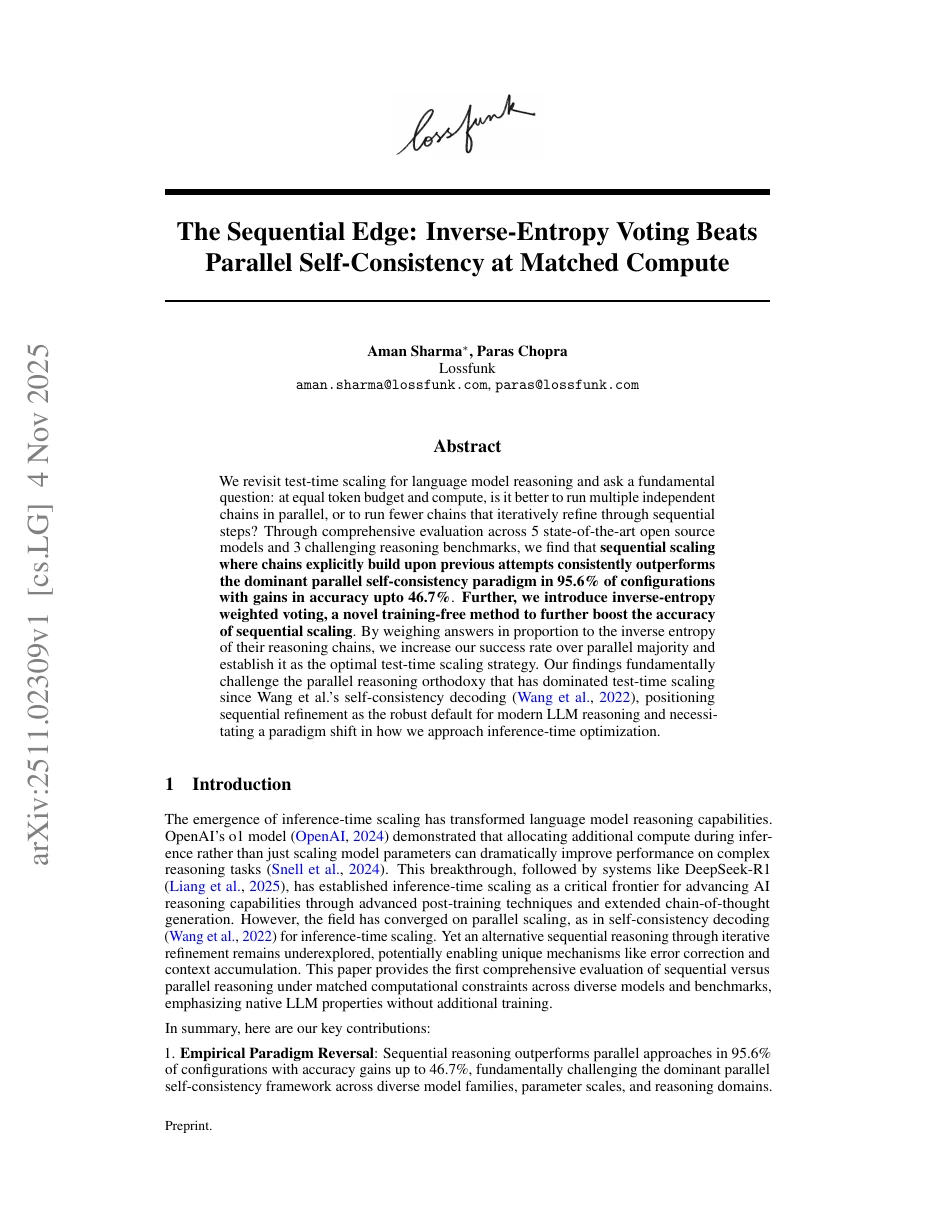
Sequential reasoning wins in 95.6% of configurations at matched compute, with accuracy gains up to 46.7%. Introducing inverse-entropy weighted voting.
-
Using sequence-level entropy as a confidence signal to reduce inference tokens by 25-50% without sacrificing accuracy.
My World of Research
News
| Sep 2026 | Two papers accepted as posters at NeurIPS 2026 — Frontier Coding Agents Use Metaprogramming (Main Track) and EsoLang-Bench (Evaluations and Datasets Track). |
| Aug 2026 | Started my MS CS at Georgia Tech and graduate research advised by Prof. Chao Zhang. |
| Apr 2026 | Admitted to Georgia Tech MS CS (Fall 2026) |
| Apr 2026 | EsoLang-Bench published at ICLR 2026 Workshops ICBINB & LLM Reasoning |
| Apr 2026 | LLM Deception in Auctions published at ICLR 2026 Workshop MALGAI |
| Dec 2025 | Two papers accepted at NeurIPS 2025 Workshops (FoRLM, Efficient Reasoning) |
| Oct 2025 | Ripple Effect Protocol published, part of Project Iceberg |
| Jun 2025 | Joined Lossfunk AI Lab as Researcher |
| Feb 2024 | Started research collaboration with MIT Media Lab |
| May 2023 | Joined Ikigai Labs as ML Engineer |
| Jul 2022 | MLH Fellowship - Hubble Protocol (Solana/Rust) |
| May 2022 | Google Summer of Code - NumFOCUS (Julia) |
Get in Touch
Interested in collaborating, have research questions, or just want to chat? Drop me a message.